Find the right part for your vehicle
Add your vehicle and shop with confidence
Chains
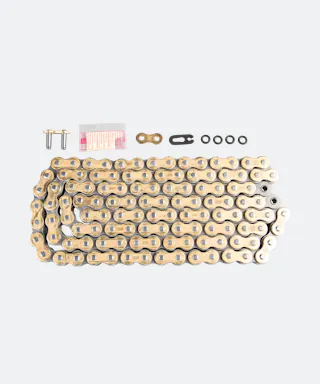
$97.99
Originally: $109.99
D.I.D VX3 520 Chain – Search by bike

From
$33.99
Originally: $46.99
D.I.D 428 H Chain

From
$35.99
Originally: $45.99
D.I.D 530 Chain – Search by bike

- super price
From
$52.99
Originally: $94.99
JMT 525X2 Gold Chain – Search by bike

- super price
From
$46.99
Originally: $72.99
JMT 520X2 Gold Chain – Search by bike

From
$61.99
Originally: $109.99
JT 525Z3 X-Ring Chain – Search by bike

- super price
From
$55.99
Originally: $92.99
JMT 530X2 Gold Chain – Search by bike

From
$53.99
Originally: $91.99
JT 520Z3 X-Ring Chain – Search by bike

From
$27.99
Originally: $46.99
JT NN520HDS2 Chain

From
$75.99
Originally: $171.99
D.I.D G&G 520ZVMX X-Ring Chain – Search by bike

$99.99
Originally: $117.99
RK 525 Chain – Search by bike
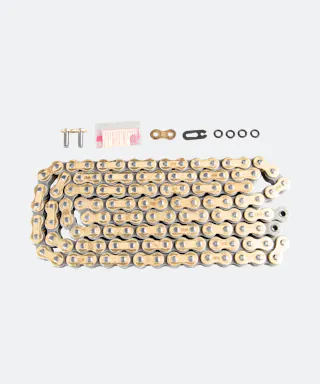
$91.99
Originally: $109.99
D.I.D VX3 520 Chain – Search by bike

From
$17.99
Originally: $47.99
Snell Powerlink 428 X-Ring Chain – Search by bike

From
$30.99
Originally: $39.99
D.I.D 520 Chain Standard – Search by bike

From
$8.55
Originally: $14.99
RK 415HSB Chain

From
$97.99
Originally: $132.99
RK 530 Chain – Search by bike

From
$72.99
Originally: $99.99
RK 525 Chain – Search by bike
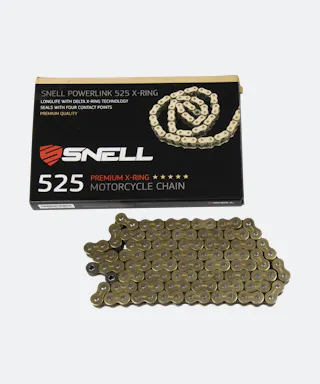
$21.99
Originally: $65.99
Snell Powerlink 525 X-Ring Chain – Search by bike

From
$23.99
Originally: $44.99
D.I.D 530 Chain

From
$38.99
Originally: $54.99
RK 530KS Chain
- super price
From
$40.99
Originally: $75.99
JMT 520X2 X-Ring Gold Chain – Search by bike

- super price
From
$8.49
Originally: $24.99
RK 420MXZ Racing Chain

From
$33.99
Originally: $42.99
D.I.D 525 Chain

From
$18.99
Originally: $109.99
D.I.D 428VX X-Ring Chain – Search by bike

$35.99
Originally: $49.99
D.I.D 530 Chain – Search by bike

From
$60.99
Originally: $117.99
JT 530Z03 X-Ring Chain – Search by bike

$124.99
Originally: $137.99
CZ SDZZ 525 X-Ring Chain

From
$54.99
Originally: $99.99
JT 530X1R Chain – Search by bike

$97.99
Originally: $109.99
CZ DZX 520 X-Ring Chain

$101.99
Originally: $119.99
CZ DZX 530 X-Ring Chain

$115.99
Originally: $142.99
CZ SDZZ 530 X-Ring Chain

From
$67.99
Originally: $99.99
RK 520ZXW Chain – Search by bike

$114.99
Originally: $129.99
CZ SDZZ 520 X-Ring Chain

$86.99
Originally: $114.99
CZ DZX 525 X-Ring Chain

From
$86.99
Originally: $151.99
D.I.D 630VS Chain O-ring Endless – Search by bike
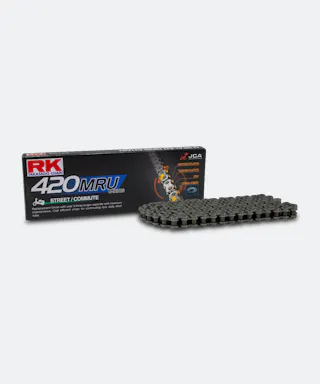
From
$39.99
Originally: $79.99
RK Chain 420 O-Ring Chain – Search by bike

From
$103.99
Originally: $151.99
D.I.D 520 ZVM-X Chain X-ring – Search by bike

- super price
From
$38.99
Originally: $137.99
CNC Racing Upper Chain Protector

$21.99
Originally: $25.99
D.I.D 520 Chain

$62.99
Originally: $74.99
RK 525 XSO Chain X-ring – Search by bike
Non O-ring, O-ring, and X-ring Motorcycle Chains:
Everything You Need to Know Before You Buy
There are several things to consider when you buy a new model-specific chain. Rest assured that XLMOTO offers the best, high-quality brand chains like D.I.D at prices that will be easy on your pocketbook.
Why Should You Replace Your Chain?
If your chain is too old and worn, you risk the chance that it might break or come off the sprocket. Also, old chains add a lot of extra friction. That means less power to your rear wheel and faster sprocket wear.
When Should You Replace Your Chain?
An easy to tell if your chain is too worn is to go to the rear sprocket and pull on the chain. If you can see more than half of a sprocket tooth, it’s time to change the chain. A new chain should fit very snugly on the sprocket. Also, if your chain is rusty, or if the links are sticking, it’s time…
Non O-ring, O-ring, and X-ring Chains: Which One is Best?
The answer depends upon your application and your budget. They each have their pros and cons. Let’s start with explaining the oldest and least expensive one first, which is the standard non-O-ring. Then we’ll discuss the O-ring, and then the X-ring.
Non-O-ring Chains
The standard non-O-ring doesn’t have any way to seal the roller's other components inside the chain link itself. It relies on the rider to frequently clean and lube it to maintain it properly. The advantage of the non-O-ring is that it is the least expensive type of chain and offers the least amount of resistance. This is good for racing conditions where you want the most torque and horsepower going to your rear wheel as you can.
O-ring Chains:
The O-ring chain, which has a rubber O-ring sandwiched between the chain plates, is a more contemporary type of chain. To seal the grease that had previously been vacuum-filled between the rollers and the chain's other internal components, these O-rings are put between chain plates. O-ring type chains have a self-lubricating mechanism that allows them to last longer, perform better over time, and require less upkeep.
X-ring Chains
The X-ring is just like the O-ring, except that it offers less friction than the O-ring. Think of the X-ring as a circular shape, just like the O-ring, except that it has grooves in it so there is less surface area which creates less friction. In general, the X-ring is the best for most motorcycles, but they are more costly than the non-O-rings and the O-rings types.
O-rings and X-ring chains are self-lubricating and require less maintenance, but when you do clean them, you have to be careful not to harm the rubber O/X rings. Only use the recommended chain cleaner.
Materials
Standard chains are constructed of steel, but some are also made of carbon steel alloys, which are more resistant to wear and strain. You can choose side plates that are gold-plated to increase the chains' corrosion resistance. Some companies offer different colored chains which are both visually appealing and corrosive resistant.
Rivet Connecting Link vs Clip
Also, there are two different styles connecting links or master links for chains. The riveted style is for larger displacement bikes because it’s stronger and less likely to fail. But this rivet style requires a special chain tool to remove and install this link. The other style of connecting link is the clip-style. This is easier to install, and doesn’t require a special tool, but is less secure than the rivet-style connecting link.
Sizing
Your sprocket and your chain must match in size for it to operate properly. Sizing is determined by a 3-digit number which is a bit confusing to understand. Let’s break it down…
First, the measurements are in eights of an inch because that’s how they used to measure chains and it hasn’t changed. The first digit of the three numbers, like 520, is the pitch. The pitch is the distance from roller to roller. So in this case, the “5” stands for 5/8s of an inch from roller to roller. The next two digits are the width of the narrower part of the chain where the sprocket fits into. This is measured in fractions of eights again. The confusing part is that there is an implied decimal point between the two numbers. So, 520 means 2.0 eights of an inch which can be reduced to a quarter of an inch wide.
XLMOTO has all of your favorite brands such as:
24MX
CZ
D.I.D
Ek-Chains
JMT
JT Sprockets
RK Chain
Renthal
Snell
Power Ahead with XLMOTO Universal Chains
Whether on a daily commute or a cross-country road trip, the drive chain on your motorcycle is the vital link that connects the engine to the back wheel. Without this critical component, you’re going nowhere. When replacing a motorcycle chain through wear or a performance upgrade, XLMOTO’s incredible range of universal drive chains will keep you powering ahead. Motorcycle chains may appear bulletproof, but every time you give your motorcycle a handful of throttle, it’s under incredible strain. Chain stress isn’t only limited to fire-breathing sports bikes either. The motorcycle’s weight, power output, and rear tire width are all relative. In this respect, the chain is subject to the same percentage of stress, whether it’s on a Honda Super Cub or Ducati Panigale.
All chains need maintenance
There are two types of motorcycle chains: roller and sealed. Roller chains are simple, strong, and easy to produce, which makes them inexpensive. On the negative side, this chain type is maintenance-heavy, needing regular attention and lubrication to prevent premature wear and failure. Alternatively, sealed chains are self-lubricating, with the lubricant injected between the pin and bush at the production stage. Tiny seals in many different shapes keep the high-temperature grease in place. The most common seals are the O-ring and X-ring seals. The common misconception about O and X-ring chains is that their self-lubrication properties render them maintenance-free; this is not the case. All chains need regular maintenance and lubrication to ensure they provide the maximum number of trouble-free kilometers. With each chain link made up of plates, bushes, and rollers, the average motorcycle chain has 100s of parts.
Even under regular riding conditions, dirt, dust, and road debris get kicked up into the chain. As you clock up the kilometers, the grime acts as a grinding paste, wearing away the chain until the components are worn. This wear allows the chain to stretch. Left unchecked, it will eventually fail or jump the sprocket. Having established the complex nature of the seemingly simple motorcycle chain, how easy is it to choose the correct one for your motorcycle?
Choosing a motorcycle chain
Motorcycle chains, like tires and brake pads, are available as a basic replacement or performance upgrade. The most basic motorcycle chain is the roller or non-sealed chain. These chains are maintenance-heavy, but their low cost makes them popular for small horsepower bikes. A significant step up in terms of performance and shelf life comes with the O-ring chain. With the O-rings fitted inside the chain's link plates, lubrication stays in, and dirt stays out. At the top of the performance tree is the X-ring motorcycle chain. As its name suggests, the seal is in the shape of an X. Manufacturers maintain that this shape allows more of the sealed-in grease to stay in position. It is this that creates less friction and extends chain life.
What do the numbers on a chain mean?
The chain's specification will show numbers such as 415, 520, or 630. These numbers relate to size; for motorcycle chains, the increments are 1/8-in. For instance, on a 520 chain, the five (or the pitch) represents 5/8-in which is the distance between two pins. The second two numbers relate to the size of the roller width. If you are unsure of your chain size, it is best to consult the owner’s motorcycle manual. Whether you're looking for a budget replacement or a top-of-the-range performance upgrade, XLMOTO's range of motorcycle chains will keep your ride powering ahead.